Case study
Restock Platform Admin Console
Restock’s admin console brings user accounts, receipt processing, text-recognition checks, and system status into one workspace.
Open live project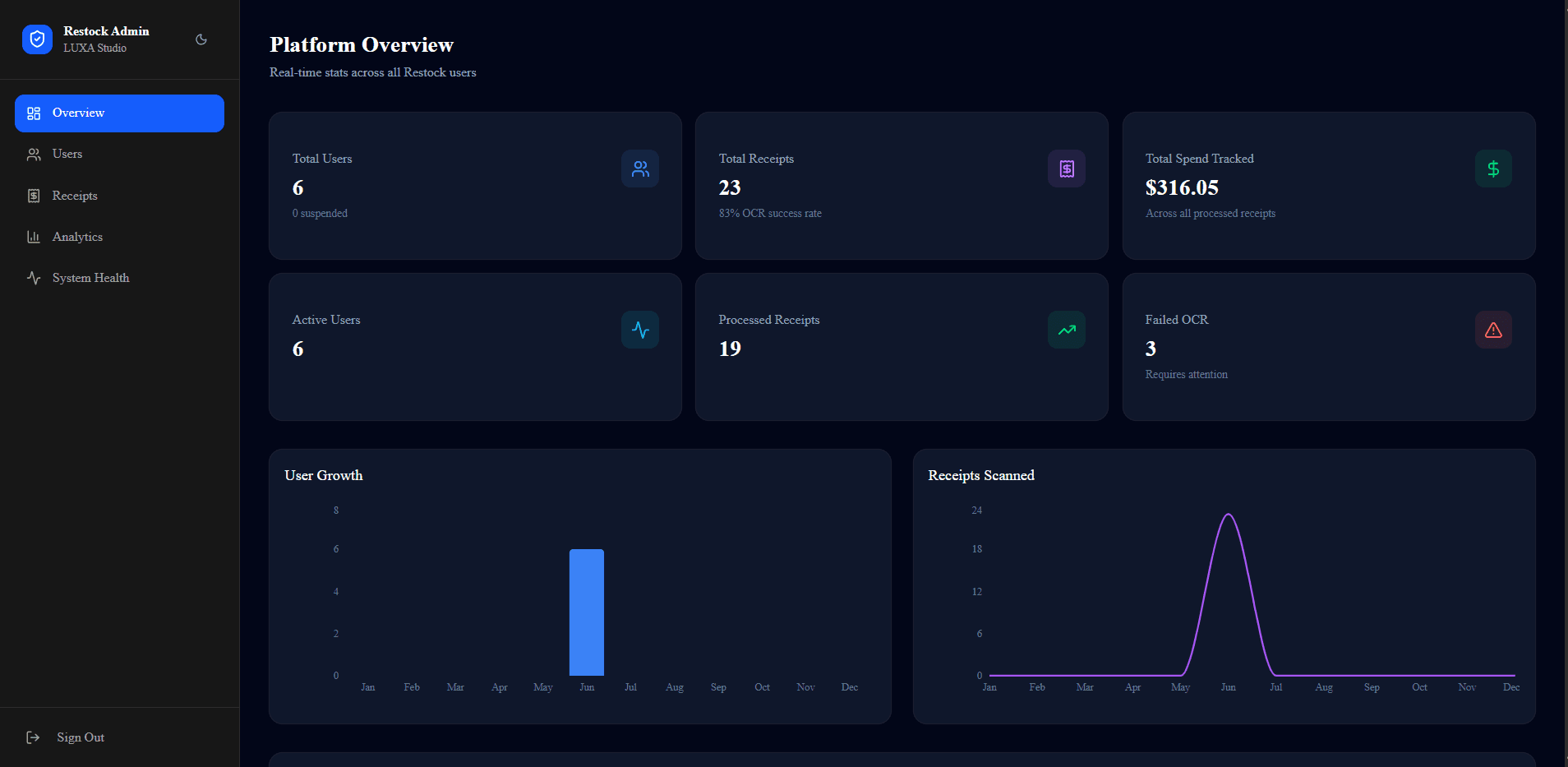
Context
Restock turns receipt scans into spending records. The team needed admin tools to review users, check text-recognition results, and monitor the service.
The problem
Reviewing users, processing issues, and system status meant consulting separate records and tools. An admin console could bring those checks into one place.
Constraints
- The console needed to separate internal administration from the customer product
- Operational status and failed OCR states had to remain easy to distinguish at a glance
- Dense user, receipt, and infrastructure data needed a consistent hierarchy across screens
What Luxa designed
Luxa organized the console around five operator questions: what is happening, who is using the platform, how receipts are processing, which trends matter, and whether the system is healthy. A persistent navigation rail and shared status language keep those views connected.
What Luxa built
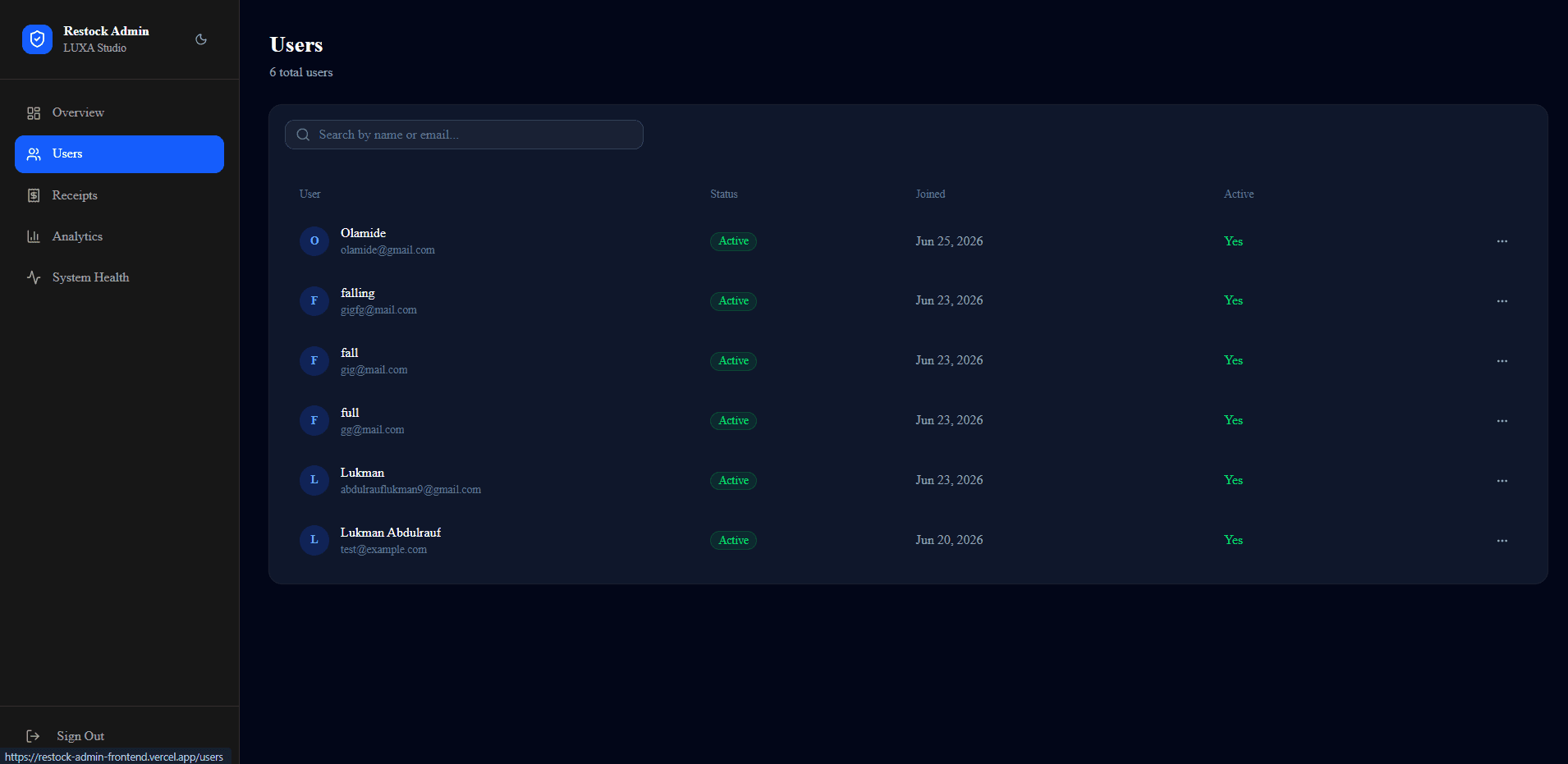
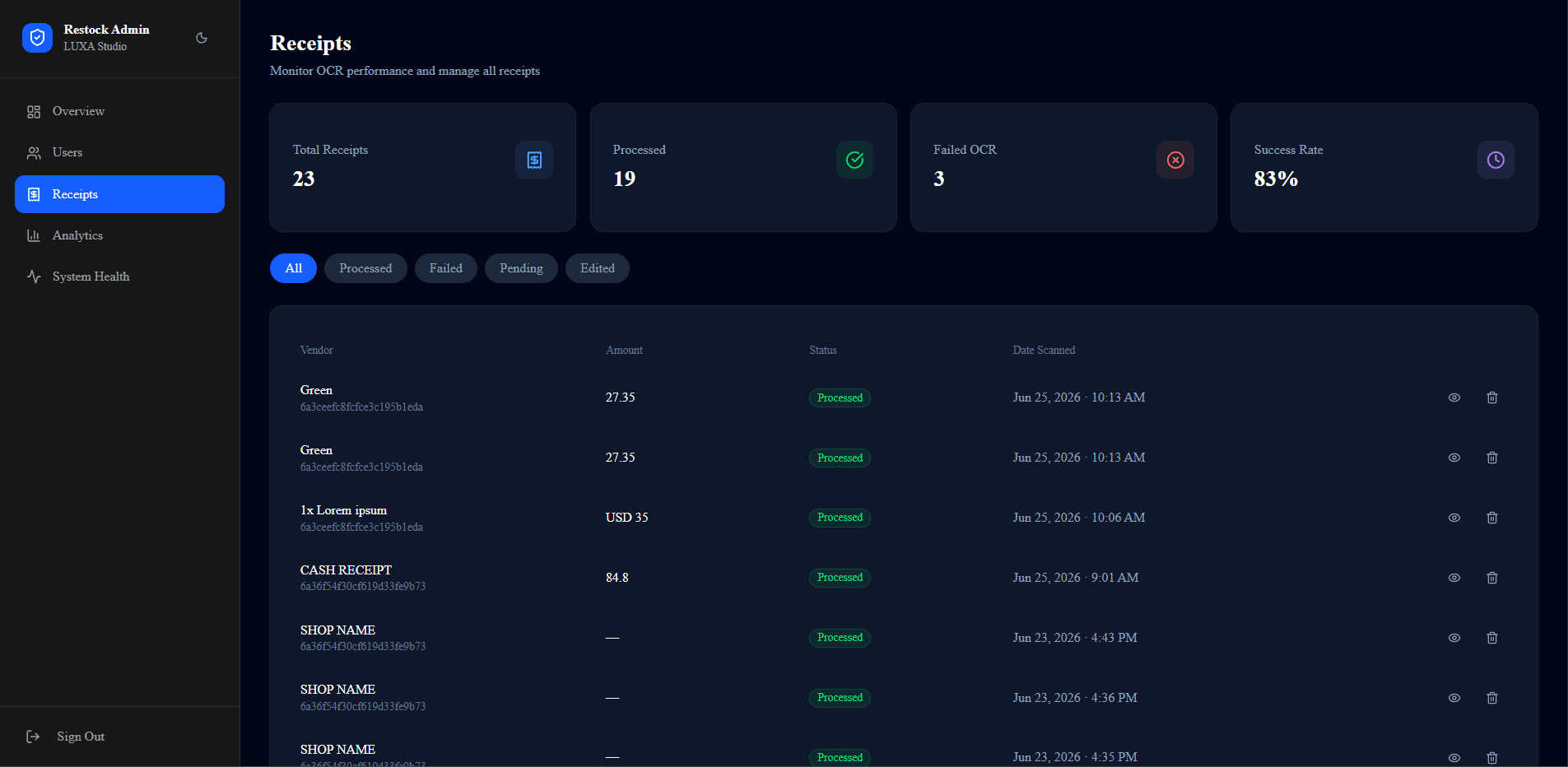
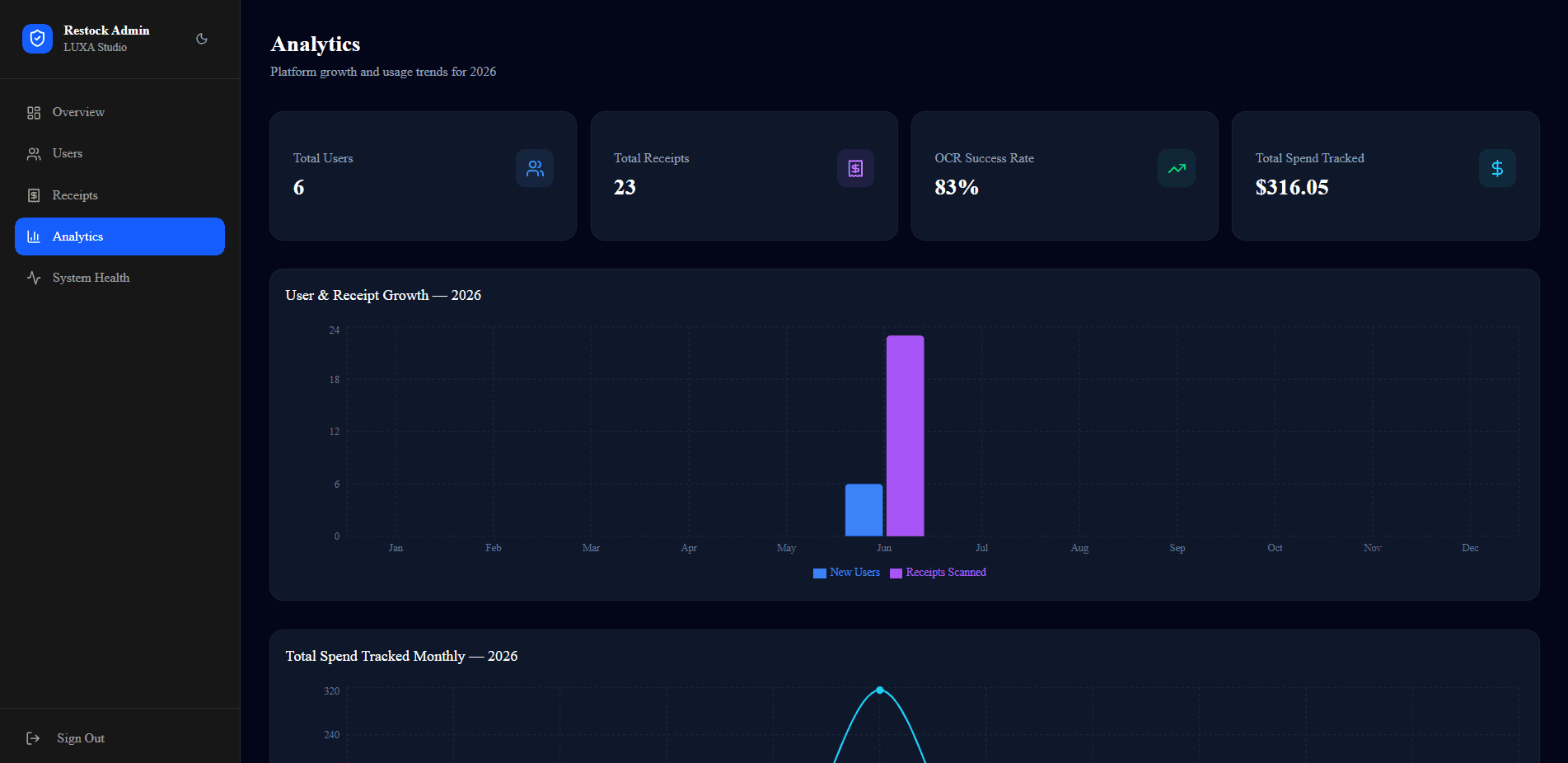
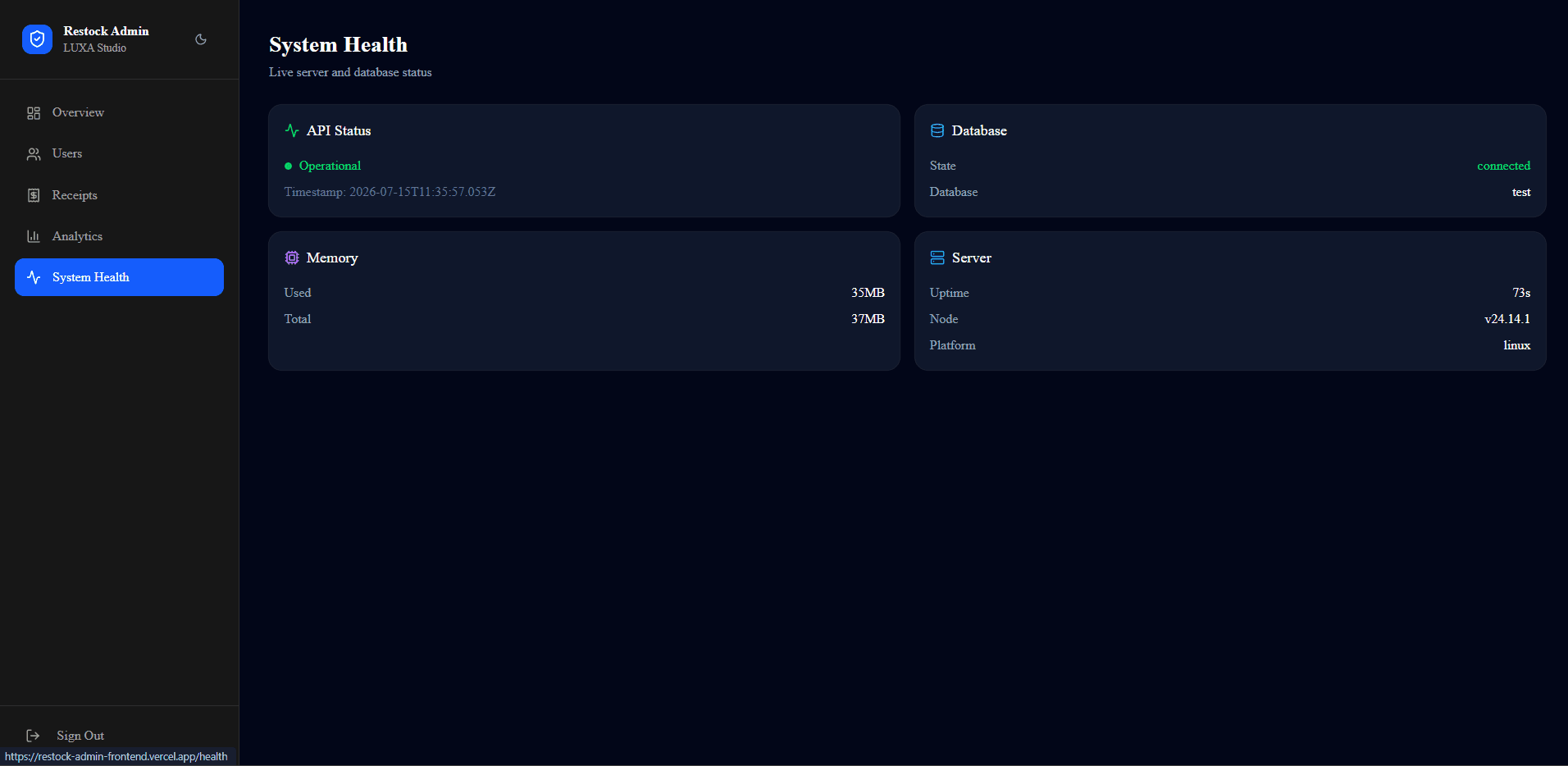
A protected admin console with a platform overview, searchable user management, receipt and OCR monitoring, usage analytics, spend tracking, and live API, database, memory, and server health views.
Snapshot evidence
Qualitative outcome
- Platform activity and operational exceptions became visible in one admin workspace
- Receipt processing can be reviewed by status, with failed OCR surfaced for follow-up
- User oversight, growth analytics, and infrastructure health now share one navigation model
What this means for similar businesses
For SaaS products, the internal console is part of the platform foundation. Giving operators a purpose-built view of users, processing exceptions, and service health reduces the need to manage the product through disconnected technical tools.
Platform Audit
Working through a similar problem?
Book a Platform Audit and we'll map the workflow, the platform gap, and the right build plan for your situation.
- Your current process
- What needs to change
- Where to start